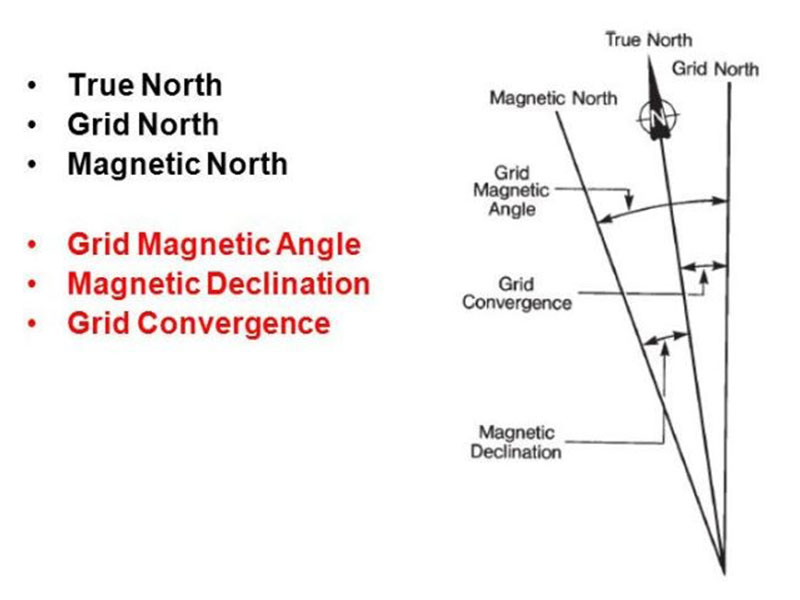
Declination: Difference between True and Magnetic North.
Declination: Sometimes known as Magnetic Variation. But this is wrong in the UK.
Deviation: False bearing due to local magnetism metal etc.
Inclination: Needle dipping up/down as magnetic field varies in intensity.
Magnetic Variation: Called Grid Magnetic Angle in the Military.
Magnetic Variation: Difference/angle between Magnetic and Grid North.
North = 000 degrees East = 090 degrees South = 180 degrees West = 270 degrees
The Magnetic Variation is about 1 degree in 2021 (depending where you are) the Compass has errors of 3 maybe 4 degress. So is it worth trying to add or subtract the variation? Your call 😊
3 Like(s)
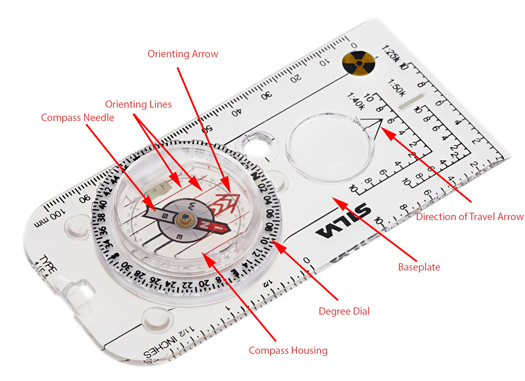
Compass Parts from Mick Fitzpatrick
Worth knowing.
1 Like(s)
Magnetic Variation/Grid Magnetic Angle from Mick Fitzpatrick
The difference between grid and magnetic north.
Is NOT the same as 'declination'. Often confused, as some countries DO NOT have a grid North!!
0 Like(s)
Map Contour Notes from Mick Fitzpatrick
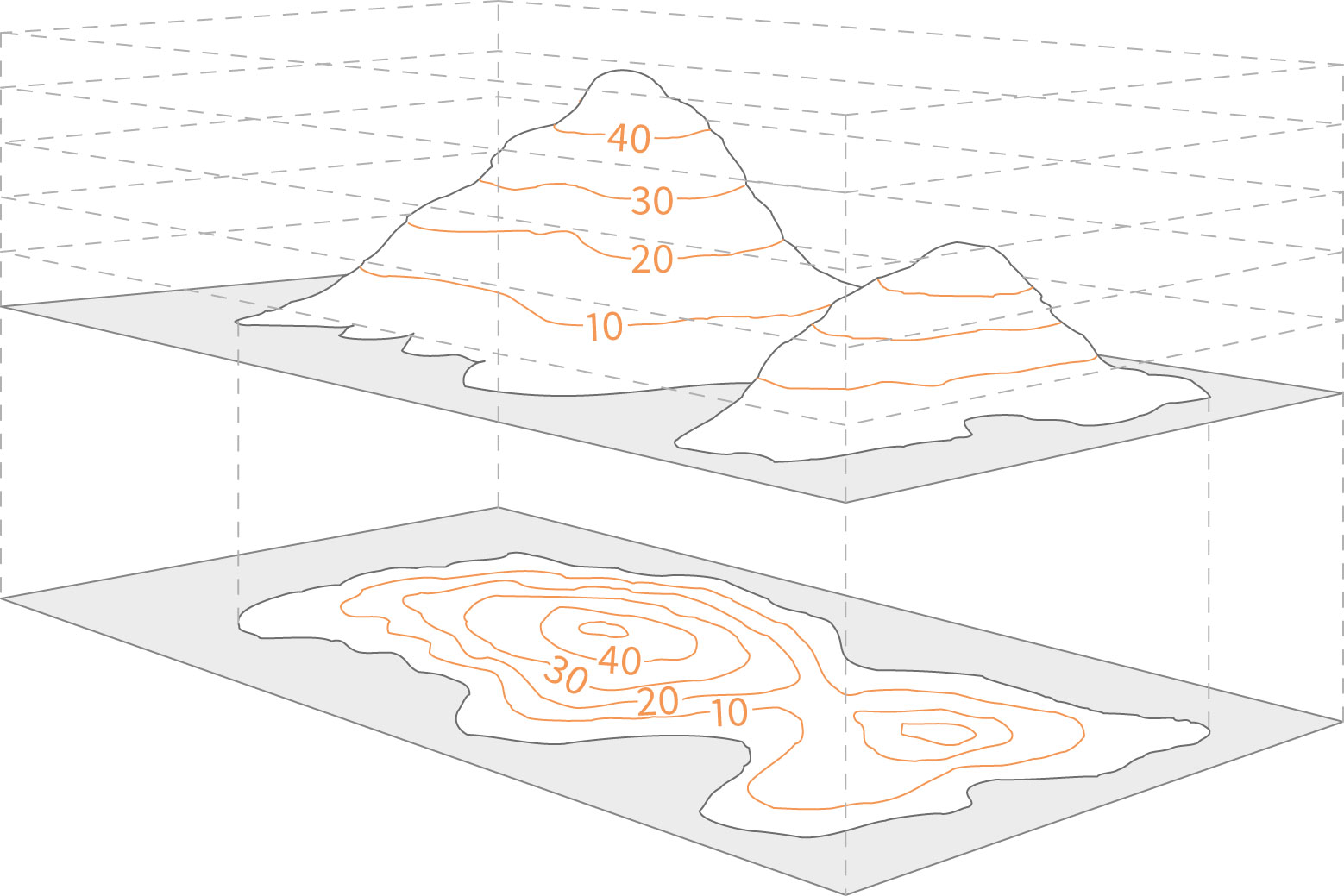
An imaginery line drawn on a map connecting points of the same height.
Explorer 1:25 000 maps use 10 meter intervals for uplands.
Explorer 1:25 000 maps use 5 meter intervals for lowlands.
Harvey maps use 15 meter intervals.
Index Contour is thicker at every 5th contour.
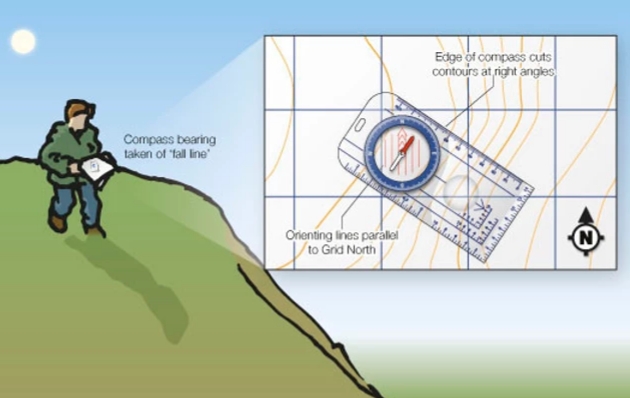
The direction of a slope is called the Slope Aspect.
The spacing between contours is the Slope Angle.
0 Like(s)
Map types in the UK from Mick Fitzpatrick
The main ones are:
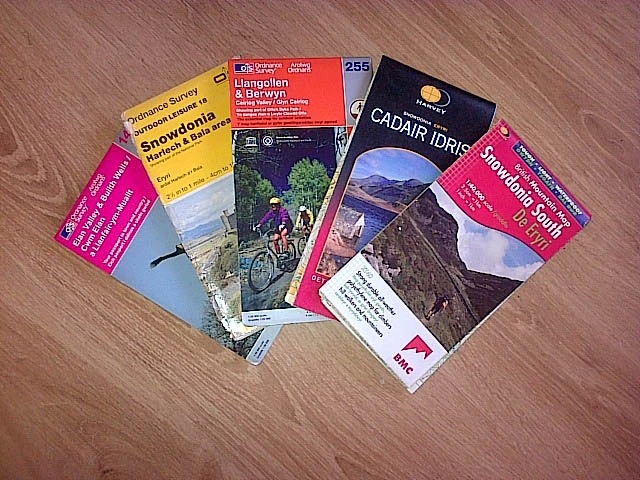
Ordnance Survey Landranger 1:50k Scale.
Gives complete UK coverage. Unfortunately they are bulky and need a map case.
Ordnance Survey Explorer 1:25k Scale.
Gives complete UK coverage. Unfortunately they are bulky and need a map case. Although you can get laminated ones that are VERY bulky.
Harvey Superwalker 1:25k Scale.
In a word FANTASTIC maps. Unfortunately they only cover National Parks etc.
Harvey Ultramap 1:40k
In a word FANTASTIC maps. Unfortunately they only cover National Parks etc.
2 Like(s)
Techniques - Aiming Off from Mick Fitzpatrick
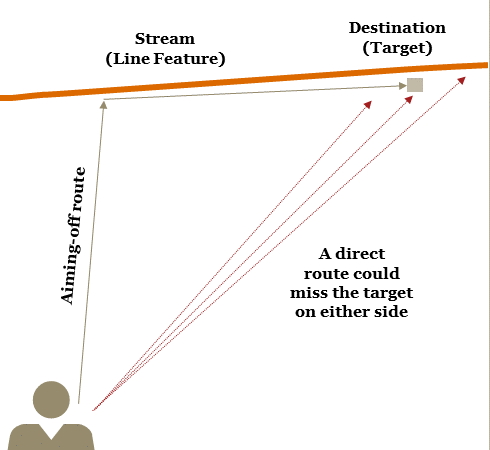
Used when the target lies on a linear feature such as a ridge stream or track
The bothy is situated at the side of a prominent stream. If we head directly for the bothy but don't hit it straight on then we won't know which way to turn to locate the bothy. By intentionally 'aiming off' to hit the stream to one side of the bothy we will know which way to turn.
1 Like(s)
Techniques - Attack Point from Mick Fitzpatrick
Need to be relatively close to a Target to be useful.
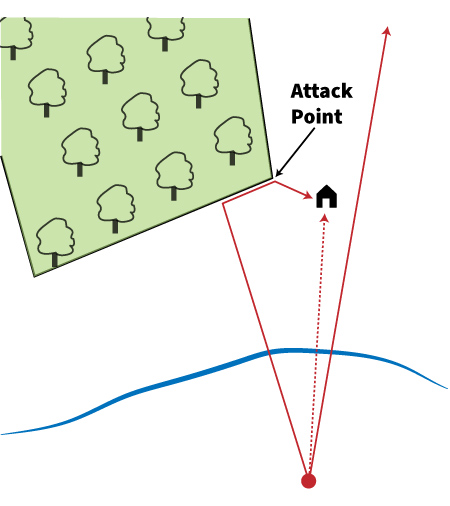
An attack point is a feature that is relatively close to your target but is more significant and easier to find.
Can also be the start of a leg from a known point.
0 Like(s)
Techniques - Boxing from Mick Fitzpatrick
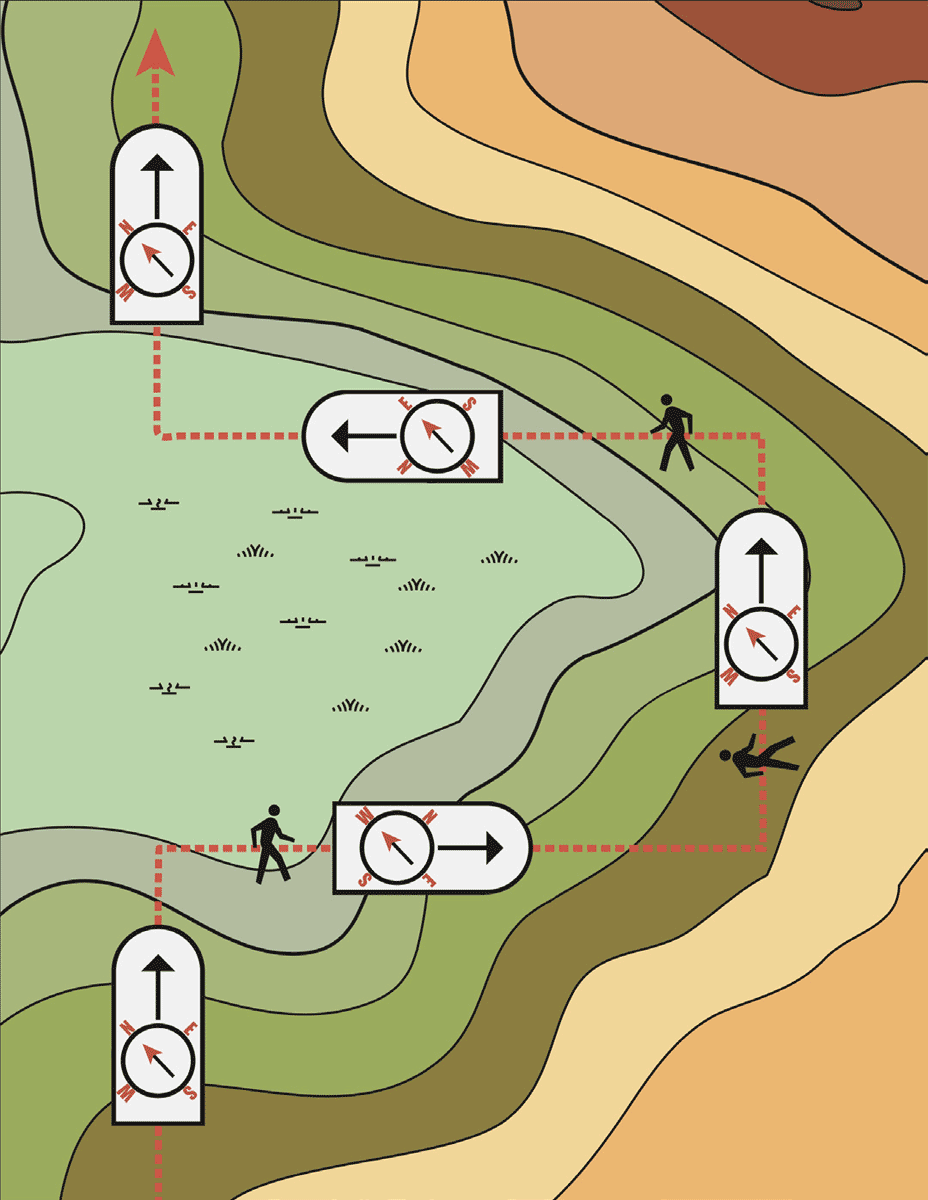
Sometimes, when walking on a bearing, we may encounter obstacles that we have to detour around, such as boggy ground, ponds and lakes or even steep gullies. This detour will take us off our bearing.
Boxing helps us detour around this obstacle but enables us to get back on our initial bearing so as to not to have to change it.
The easiest way to do this is by using 90 degree turns.
0 Like(s)
Techniques - Collecting (Ticking) Features from Mick Fitzpatrick
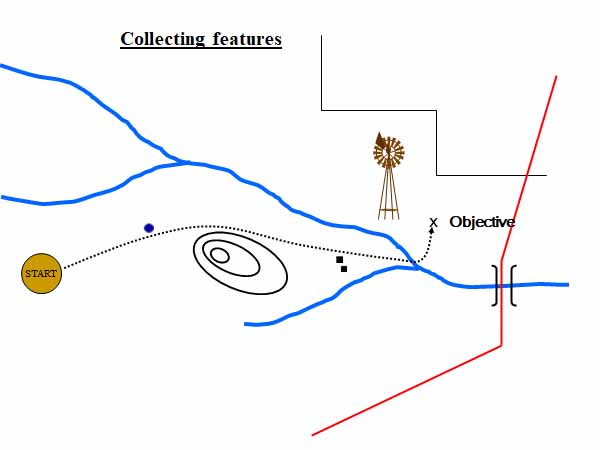
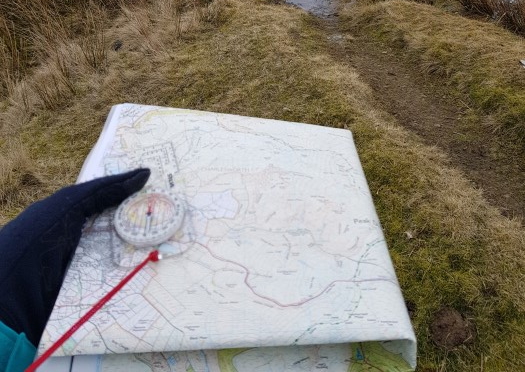
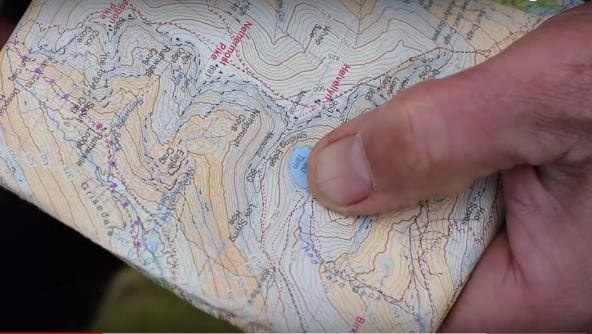
The key skill is to keep track of where you are at all times. How do you do this? Well it is vital to keep a constant eye on the terrain and relate this to the map as your walk progresses. You should be checking the immediate and distant terrain noting key features such as high points crags valleys streams and ridges. It also helps to looking backwards to see where you've come from. All this information helps you develop a feel for the terrain around you and where you are located within it. As you pass by each feature you can 'tick it off '. This helps to re-affirm your position continuously. So if someone were to say 'Show me where you are on the map' then you should be able to point to your location with a high degree of confidence. It goes without saying that you must have your map to hand and folded showing your route.
0 Like(s)
Techniques - Handrails from Mick Fitzpatrick
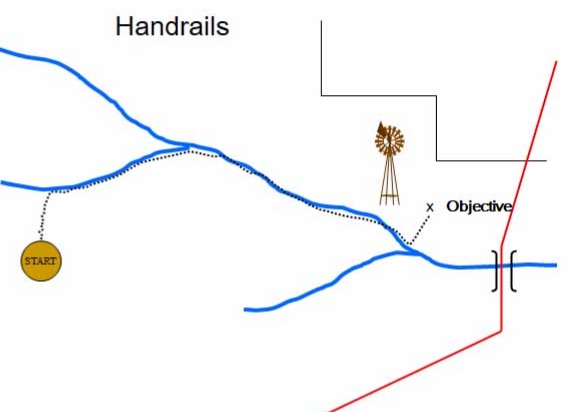
Handrailing' can be used when there is a linear feature that will take us towards the target.
Linear features like walls, fences, rivers, ridges, paths, valleys, forest edges, power lines etc
0 Like(s)
Techniques - Micro Navigation from Mick Fitzpatrick
Focus on immediate features.
Move in small legs.
The more 'techniques' in your mind the better.
Use sight, sound, smell and touch
1 Like(s)
Techniques - Setting the Map from Mick Fitzpatrick
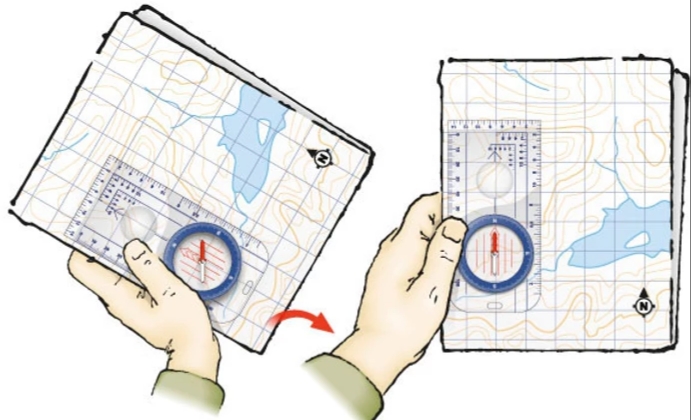
Setting the map is the technique of positioning the map so that all the features are lined up with your own location as the central point.
What is in front of you on the ground will be in front of you on the map, what is to your left on the ground will also be to your left on the map and so on.
If identifiable features are not visible you can set the map by using the compass. Use the magnetic needle to find north and line up north on the map with north on the ground.
There is no need to make any adjustments or bearings with your compass - you are just using the magnetic needle to find north. The side edges of the map will also be pointing north.
In good visibility you may be able to set the map by eye. If you've just set off from your car you will probably be able to set the map by using the road and another linear feature such as a path.
Once you are on the hill you will need to identify prominent features on the ground such as hills, ridges, valleys and tracks (maybe there's a village within view) and turn the map so
that the features on the ground line up with you at the centre.
0 Like(s)
Techniques - Slope Aspect from Mick Fitzpatrick
Using slope aspect can be a very useful tool to help you relocate. In its simplest form just use the points of the compass - north, east, south and west - to work out which direction the slope you
are on is facing and then look at the map to find the slope which faces this way.
Slope aspect can be used more precisely by taking a bearing of the direction in which the slope faces.
0 Like(s)
Techniques - The 5 D's of a route from Mick Fitzpatrick